The Client
Gap Draught
Gap Draught (opens in a new tab) provides real-time draught management for breweries, bars and other establishments. Its system monitors what is happening at each tap, giving clients visibility into pouring, sales, stock and draught quality.
The Problem
Unmeasured at the tap
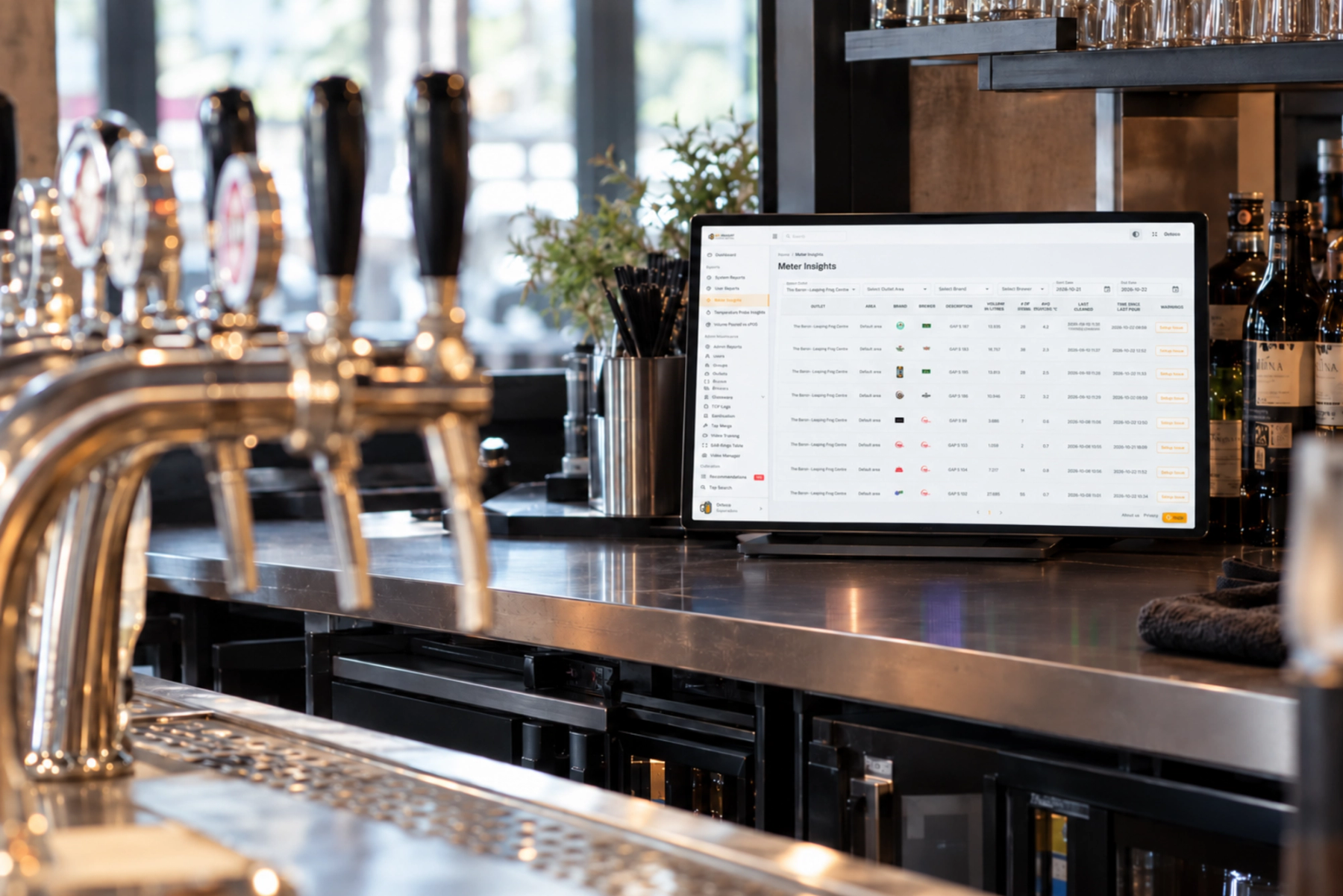
Draught beer is one of the few products a venue sells without measuring it at the point of sale. Beer leaves the keg, but what arrives in the glass depends on how it is poured, how the line is set up and what happens between service periods. Gap Draught estimates that up to 30% of what is poured can go unbilled. Without measurement at the tap, none of that is visible.
Gap Draught had a working concept, but its existing hardware solution was too large and did not provide the reliability or backup power needed for use in the field.
The solution needed a complete hardware redesign. The new system had to be significantly smaller while supporting multiple sensors, reliable connectivity, backup power and the data requirements of the platform.
The Thinking
Smaller, smarter hardware
The redesign involved balancing size, functionality, connectivity and power consumption while considering how the system would be installed and used across multiple taps and venues.
Making more fit into less
The original hardware used off-the-shelf enclosures, which limited how compact the system could become. Octoco redesigned the hardware around the requirements of the product and worked with an industrial designer to develop a purpose-built enclosure.
This allowed the electronics, connections and components to be arranged around the way the system would actually be installed and used, rather than designing around a pre-existing enclosure.
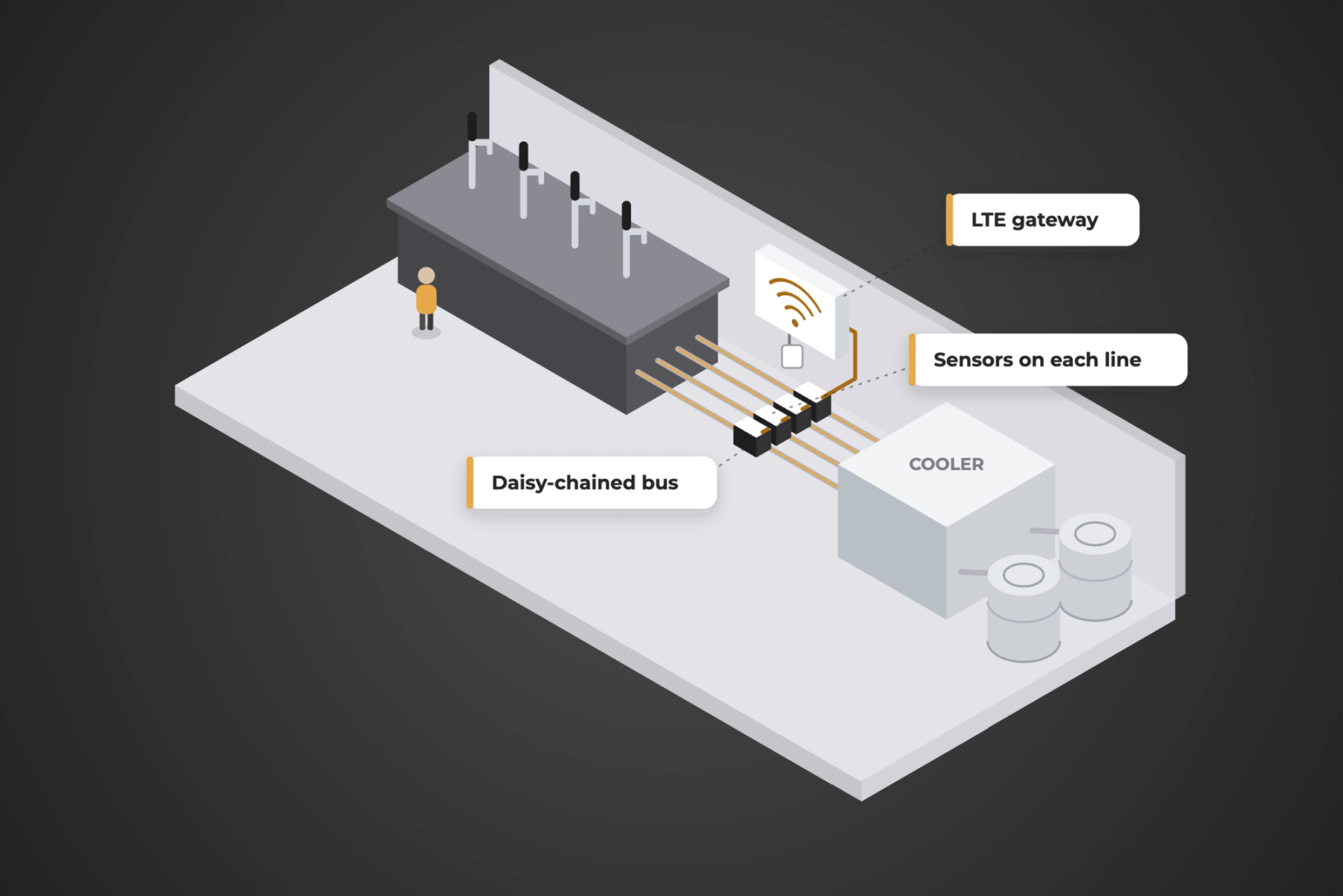
The system also needed to support multiple sensors without requiring a separate connection for each tap. Octoco developed a daisy-chain architecture that carries both power and data along the chain, allowing multiple sensors to connect back to a single gateway.
Keeping the system connected
The gateway needed to collect data from all connected sensors and send it to the cloud without relying on the venue's Wi-Fi.
Octoco integrated an LTE modem and SIM into the gateway, giving the system its own cellular connection. The gateway collects the sensor data, synchronises it with the cloud and makes it available to the monitoring platform.
Power was another consideration. The gateway normally runs from mains power, but venues can experience power interruptions. Octoco therefore incorporated a backup battery designed to keep the gateway and connected sensors running for approximately four to six hours during an outage.
The Build
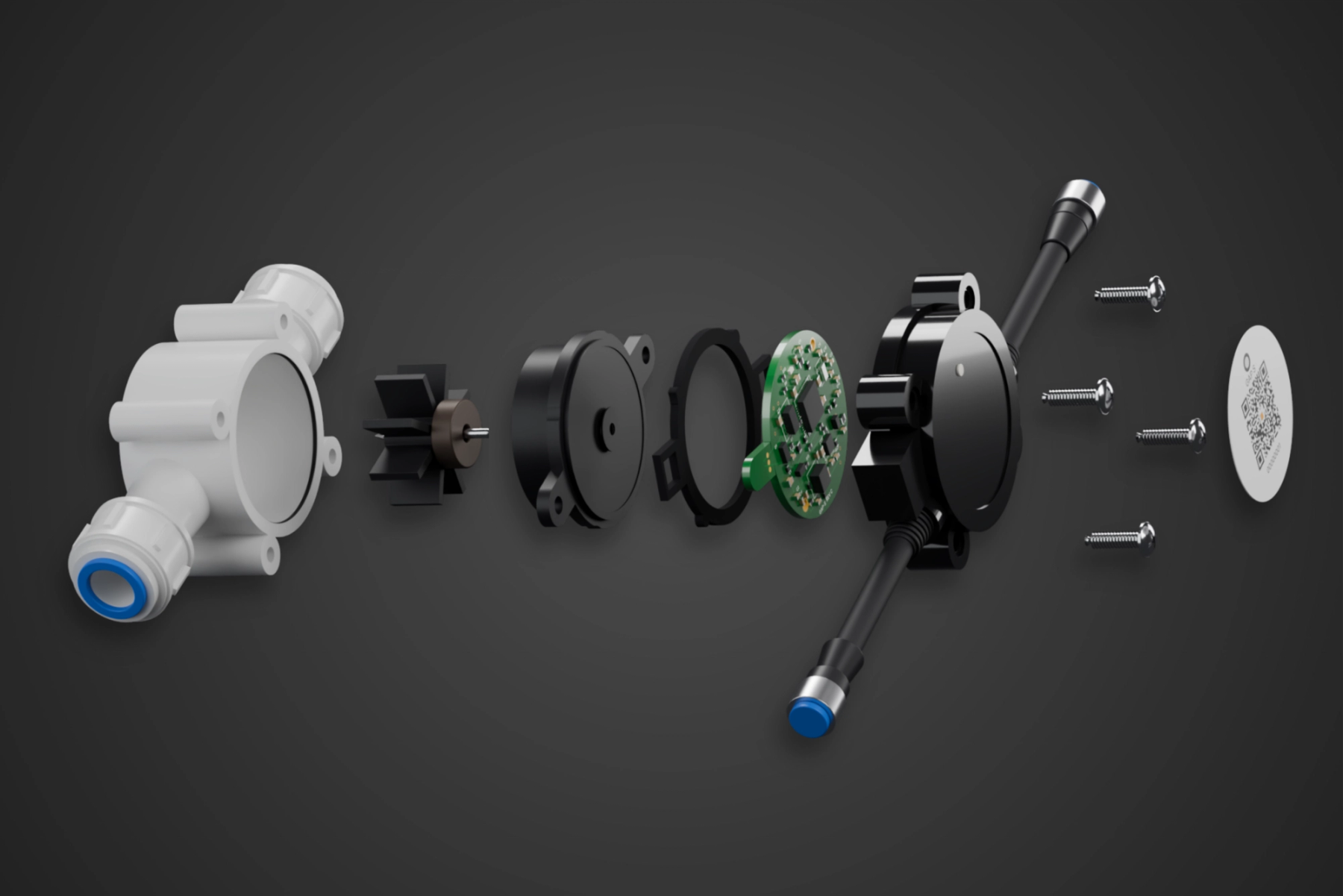
The full draught setup
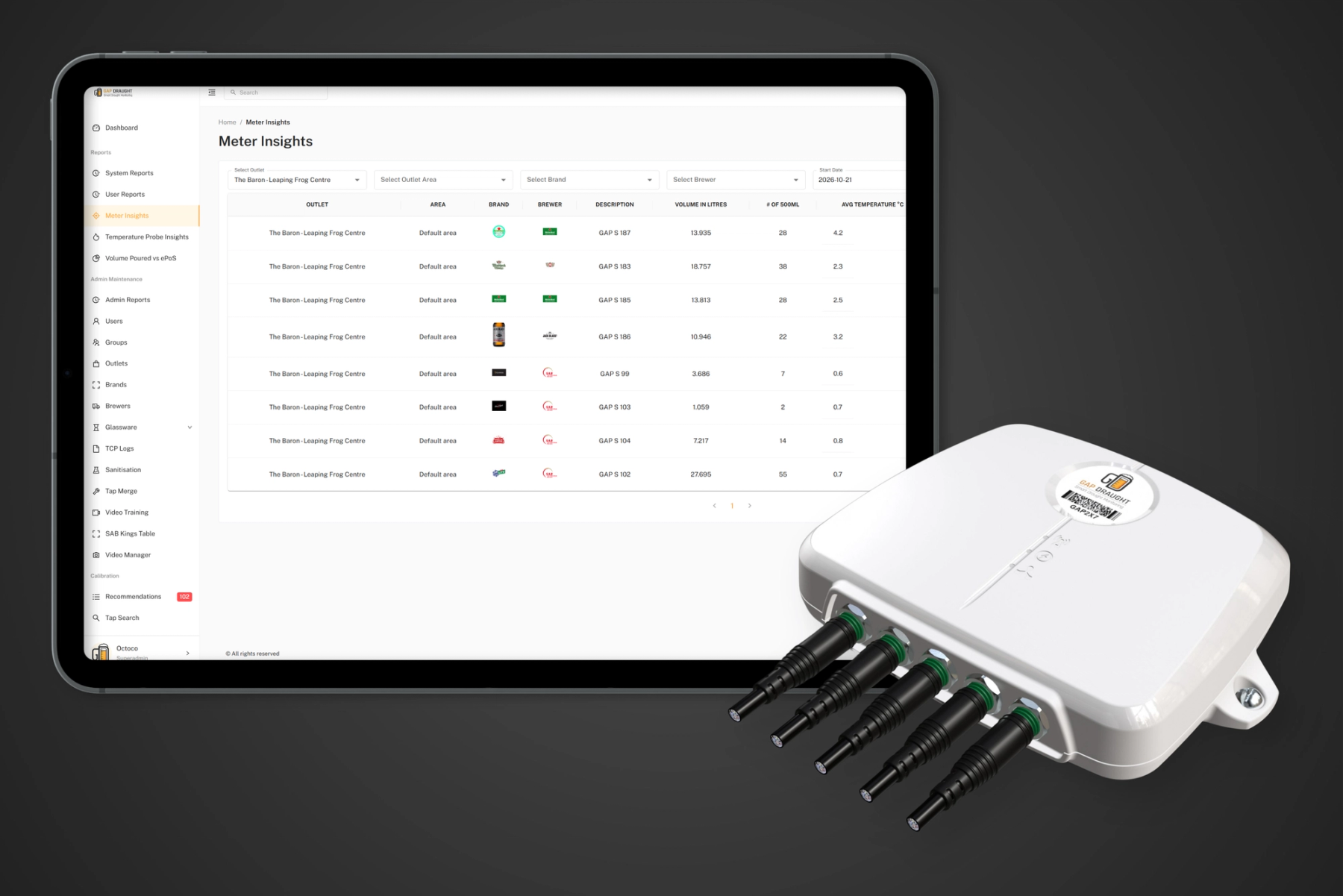
Octoco redesigned and developed the sensing hardware, gateway and enclosure around Gap Draught's requirements.
- Flow sensor: Measures the volume of each pour at the tap, including the date, time and size of each pour.
- Temperature sensor: Measures the temperature of the beer in the line.
- TDS sensor: Measures the conductivity of the liquid in the line, helping identify whether it contains beer, water or cleaning solution.
- Daisy-chained sensor bus: Carries power and data along a single chain, allowing one gateway to serve multiple taps.
- LTE gateway: Collects data from the sensor chain and synchronises it to the cloud over its own SIM, independent of the venue's network.
- Backup power: Provides approximately four to six hours of battery power to the gateway and connected sensors during an outage.
- Purpose-designed enclosure: A housing designed specifically around the product requirements, replacing the off-the-shelf enclosures used previously.
- Cooler probe sensor: A separate temperature probe that sits in the cooler bath around the coils and connects to the same sensor chain.
1 / 3
The Expertise
Engineered as one system
This project brought together Octoco's experience across hardware and embedded systems, connectivity and product development.
The team worked across the electronics, sensor architecture, cellular connectivity, power management and enclosure design required to completely rework the existing hardware into a field-ready system.
The project also required the hardware to work as part of a larger system. The sensor architecture, LTE connectivity and backup power were designed around the practical requirements of collecting and transmitting data from multiple taps, while the enclosure was developed around the final electronics and installation environment.
The Result
Visibility at every tap
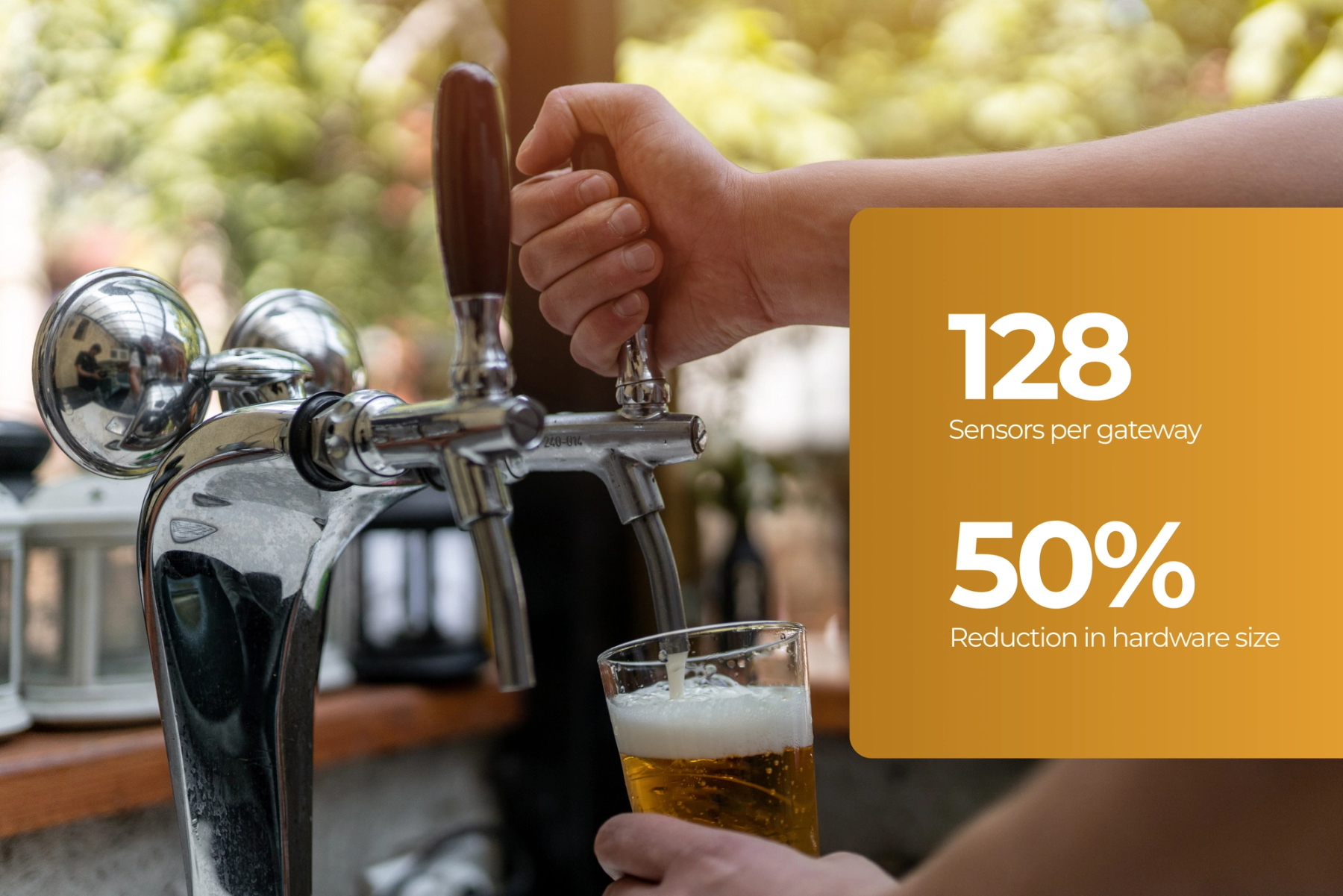
Octoco replaced Gap Draught's existing hardware with a redesigned system that is smaller, independently connected and able to continue operating through power interruptions.
- 50% reduction in hardware size
- Up to 128 sensors per gateway
The system gives Gap Draught's customers a clearer view of what is happening at each tap, with data that can be used to:
- Compare beer poured with beer sold.
- Identify over-pouring, wastage and pouring outside operating hours.
- Monitor serving temperatures and cooler conditions.
- Track sanitisation and distinguish cleaning volumes from beer.
- Monitor stock levels and pouring activity.
- Understand which products are performing across different venues.
- Measure the impact of promotions and changes to pricing.
For breweries, this creates visibility across their draught network and helps them manage how their products are being poured and sold. For bars, it provides the data needed to understand pouring efficiency, wastage and stock.